Why AI makes things up (hallucination) and how not to fall for it
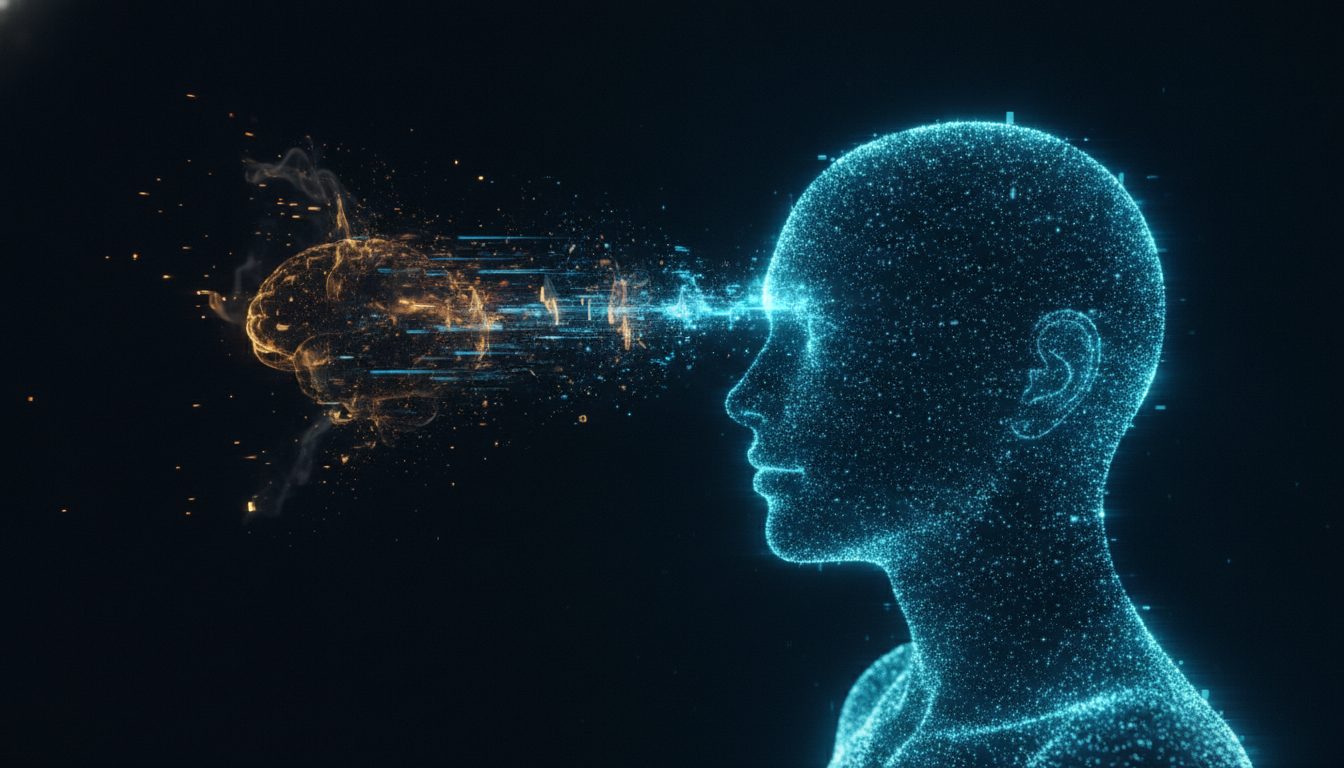
What is hallucination in artificial intelligence?
It is when AI generates false information as if it were true, with full confidence. It happens because it predicts the most likely text, without checking whether it is real.
You ask a question, the AI answers instantly, in well-written sentences and with total confidence. It looks true. Except that, sometimes, it simply made it up. It cited a study that does not exist, gave a wrong date, invented a convincing number out of nowhere. This has a name: hallucination. And understanding why it happens is what separates people who use AI safely from people who get fooled.
What an AI hallucination is
A hallucination is when artificial intelligence generates false information as if it were fact, with no sign of doubt. It is not an isolated "bug" or bad intent. It is a feature of how these systems work. The problem is not that it gets things wrong, it is that it gets them wrong confidently, in the same tone it uses when it is right.
Why AI makes things up (the reason is simpler than it seems)
Deep down, a language AI does not "know" things the way you do. It was trained to predict the most likely next word in a sentence, based on everything it has read. Its goal is to sound plausible, not to be true. Most of the time, plausible and true line up. But when it does not have the information, instead of saying "I don't know", it fills the gap with whatever seems most likely. And what seems likely is not always real.
Think of it as a very talented and very self-assured storyteller: it never freezes, it always has an answer ready. The catch is that "having an answer ready" is not the same as "having the right answer".
Where hallucination shows up most
It tends to appear exactly where it is most dangerous: in the specific details. Watch out when you ask for:
- References and links. AI loves to cite articles, books and URLs that sound real but do not exist.
- Numbers, dates and statistics. A precise, convincing figure may have simply been invented.
- Quotes, laws and rules. Sentences attributed to someone or legal clauses that were never worded that way.
- Names, biographies and recent facts. The more specific or current, the higher the risk.
How not to fall for it (a practical checklist)
The good news: you can cut the risk a lot with simple habits.
- Give context, do not let it guess. Paste the document, the data or the reference text. When the AI has the source in hand, it invents far less.
- Ask for the source and check it. "Where did you get this?" If the source does not exist or does not match, it was a hallucination.
- Be suspicious of over-confidence. The more specific and confident the claim about something obscure, the more it is worth checking.
- Use it for drafts, not for final truth. AI is great to get started; the validation is yours.
- Cross-check with a second source. For any data going into a decision, an important email or public content, confirm it outside the AI.
| Warning sign | What to do |
|---|---|
| It cited a specific study, number or law | Ask for the source and confirm outside the AI |
| It answered instantly about something very recent | Check the date and an official source |
| It sounded too sure about an obscure topic | Ask "are you sure?" and validate |
| You gave no context at all | Provide the document and ask again |
An everyday example
You ask: "give me three studies that prove such and such". The AI returns three beautiful titles, with authors and years, formatted like a real bibliography. You search and... none of them exist. It was not a lie in the human sense, it was the AI completing the pattern "this looks like an academic reference". That is why the rule always holds: a good reference is one you were able to open.
Will hallucination ever go away?
The systems are improving, and features like web search and feeding documents reduce the problem a lot. But "reduce" is not "eliminate". As long as AI keeps predicting the most likely text, the chance of inventing exists. In other words: the skill of reviewing and verifying is not going obsolete, it is only getting more valuable.
Conclusion
AI does not lie out of malice, it fills gaps with what sounds likely. People who get this stop treating it as an oracle and start treating it as a brilliant but distracted assistant: great to speed things up, but in need of review. Trust the process, check the facts.
If you want to learn to use artificial intelligence with that critical eye, getting the best out of it without falling into the traps, that is what we teach at Data Lover: how to direct, review and trust AI the right way. Discover Data Lover and use AI with real confidence.
Frequently asked questions
It is when AI generates false information as if it were true, with full confidence. It happens because it predicts the most likely text, without checking whether it is real.
Because it was trained to sound plausible by predicting the next word, not to know the truth. When it lacks the information, it fills the gap instead of saying it does not know.
Be suspicious of specific references, numbers, dates and quotes. Ask for the source and confirm it outside the AI; if the source does not exist or does not match, it was a hallucination.
You can greatly reduce it by giving context, asking for sources and cross-checking, but not eliminate it. That is why always reviewing remains essential.

Data and AI executive with 20+ years building technology that moves businesses. Microsoft Certified Trainer, with executive education at MIT Sloan. At Data Lover, he trains professionals and leads enterprise AI projects.
See profile and all articles →