Will AI Take Your Job? What Meta Laying Off 8,000 People Really Teaches

Will AI end jobs?
Not in a simple way. It automates tasks within roles, redesigning jobs rather than eliminating them wholesale. Some roles shrink, new ones appear, and most change shape.
Few headlines are as frightening as this one: in 2026, Meta (the owner of Facebook, Instagram, and WhatsApp) cut around 8,000 jobs, nearly 10% of the company, while reassigning thousands of employees to artificial intelligence teams. The immediate reading is terrifying: the moment has come, AI is replacing people.
But the real story is more interesting, and far less apocalyptic, than the headline.
The detail almost nobody mentions
At an internal meeting in July 2026, Mark Zuckerberg himself admitted to employees that AI agent development over the previous months "hasn't really accelerated in the way that we expected," that the reorganization was not as "clean" as planned, and that the bets "haven't come to fruition yet." He expects results only three to six months down the line.
In other words: not even Meta, with all its money and its best engineers, has a finished robot that simply took over the work of 8,000 people. What happened was a bet and a restructuring, still halfway through. The company bet so heavily on AI that it cut costs elsewhere to fund that bet, shielding its AI infrastructure teams while cutting areas like integrity, security, and Reality Labs.
That completely changes how you should think about this.
AI doesn't replace jobs. It redesigns tasks
Here is the idea almost everyone gets wrong: AI rarely swallows an entire role at once. What it does is automate tasks within a role.
Think of your job as a basket of tasks. Maybe AI already does about five of them very well (summarizing, writing a first draft, organizing data, answering the basics). But others remain yours: understanding the client's context, making the hard call, taking responsibility, building trust, judging what makes sense.
When some of the tasks are automated, the role doesn't disappear. It gets redesigned. Less repetitive work is left, and more decision-making work. And that is where both the risk and the opportunity live.
The sentence you need to take home
There is a line that sums it all up: AI probably won't take your job, but a person using AI might.
The real danger is not a robot showing up at your desk. It is the coworker, the competitor, or the candidate who delivers the same work you do in a third of the time, because they learned to delegate the right tasks to artificial intelligence and kept the parts that require a human mind.
Notice the bitter detail in Meta's own story: employee morale plummeted, partly because many feel they are "training their own replacements." The difference between being replaced and being promoted is, increasingly, knowing who is in command of the tool.
From fearing AI to commanding AI
The good news is that the winning side of this story is learnable. It is not about becoming a programmer, but about knowing how to command AI: understanding what it does well, delegating the right tasks, reviewing the result with a critical eye, and using the freed-up time to move up the value chain instead of competing with the machine at what the machine already does cheaply.
That is exactly the shift that Data Lover teaches: moving from the place of someone afraid of being replaced by artificial intelligence to the place of someone who uses AI as an entire team working for them. While even the giants still stumble through this transition, whoever learns to command the tool now starts with years of advantage.
In the end, the lesson from Meta is not "AI will fire you." It is another one, far more useful: work is being redesigned right in front of you, and the only question that matters is which side of the desk you will be on.
Sources
Frequently asked questions
Not in a simple way. It automates tasks within roles, redesigning jobs rather than eliminating them wholesale. Some roles shrink, new ones appear, and most change shape.
It was a restructuring to fund and prioritize its AI bet. Zuckerberg himself admitted the results haven't come as expected.
By learning to use it: delegate repetitive tasks to AI and focus on decision, context, relationships, and responsibility, the parts the machine doesn't yet cover.
No. What matters is commanding AI in plain language: asking well, reviewing critically, and integrating it into your work.
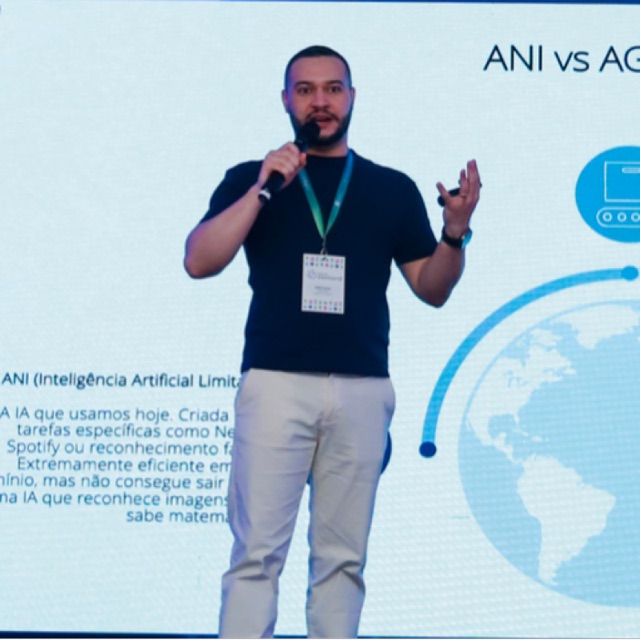
Data and AI executive with 20+ years building technology that moves businesses. Microsoft Certified Trainer, with executive education at MIT Sloan. At Data Lover, he trains professionals and leads enterprise AI projects.
See profile and all articles →